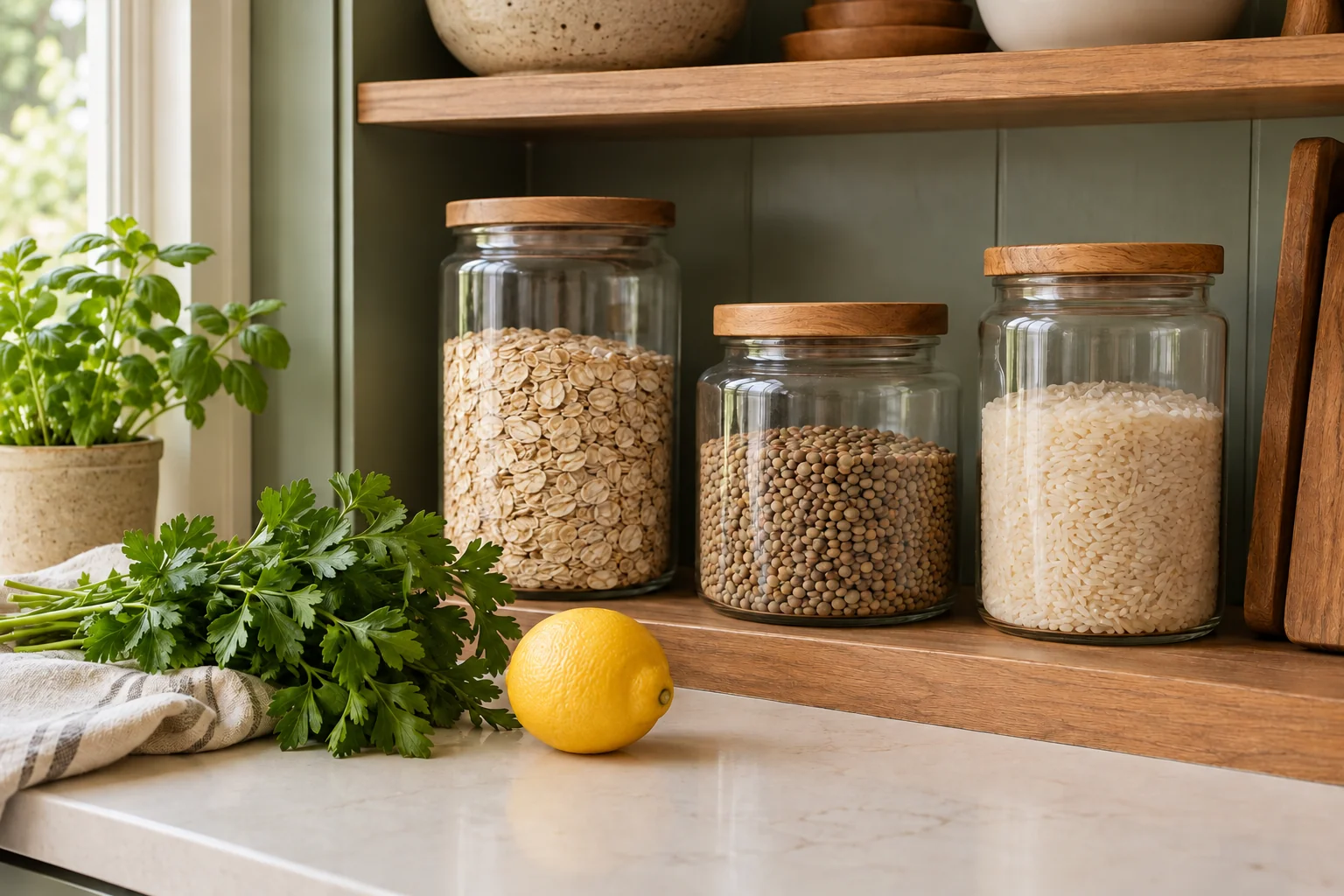
Begin with your next few meals
Before buying anything, look through the cupboard, refrigerator, and freezer. Choose two or three meals you would happily eat using some of what is already there. Planning can make shopping more organized and help a food budget go further. USDA Nutrition.gov offers practical planning and budget resources. The ideas below are flexible examples, not a prescribed diet.
Choose useful building blocks
- A familiar grain or starch: oats, rice, potatoes, or pasta.
- A protein food you enjoy: beans, lentils, eggs, tofu, canned fish, or another suitable choice.
- Vegetables and fruit: fresh, frozen, or canned options you will use.
- Flavor: a favorite herb, spice, oil, lemon, or condiment.
You do not need every item on this list. Choose foods that fit your preferences, dietary needs, kitchen equipment, and budget. Allergies and clinician-recommended restrictions take priority over general suggestions.
Think in combinations, not perfect recipes
A few ingredients can lead to several meals: rice with beans and vegetables; pasta with a favorite sauce and lentils; oats with fruit and yogurt or a suitable alternative. These are starting points, not nutrition prescriptions. Adjust the portions and ingredients to your needs. Convenience foods can be practical ingredients; preparing every component from scratch is not a requirement.
Keep a short use-first list
Put a note where you will see it: half a bag of spinach, cooked rice, an opened jar. A visible reminder is often more useful than reorganizing every shelf. Keep foods in suitable storage, follow package instructions, and use reliable food-safety guidance for leftovers. Do not rely on smell alone to decide that a food is safe.
Buy for your actual rhythm
A large package is useful only if you can use or store it safely. Smaller quantities may fit a small household or an unpredictable week better. Keep one easy fallback meal in mind for days when plans change. There is no need to buy expensive specialty ingredients to begin.
A ten-minute starting point
- Check what you already have.
- Write down two meals you enjoy.
- List only the missing ingredients.
- Choose one simple backup meal.
- After the week, notice what you used and what you would change.
Let the next shopping list reflect what you learned. More food inspiration belongs in My Pantry; questions about everyday habits can be a starting point for coaching with Stella.